
Remember the last time you needed to buy something online?
You probably opened ten browser tabs. Googled “best [product] for [your need].” Scrolled through listicles and affiliate sites. Cross-referenced specs on manufacturer websites. Checked prices across multiple retailers. Read contradictory reviews on Amazon. Then tabbed back to your original search because you forgot which model had the feature you actually needed.
We have more product choices than ever, but finding the right one feels harder than it should be. Search engines give us lists of links, not answers.
That’s exactly what large language models like ChatGPT are building. ChatGPT Shopping isn’t just another place to buy things online. It’s a fundamental rethinking of how product discovery works.
Instead of you hunting for the right product across dozens of websites, AI comes to you with personalized recommendations based on an actual conversation about your needs.
In this article, we’re going to talk about:
- What is ChatGPT Shopping?
- How is it different from ChatGPT Shopping Research?
- How to Optimize Your Listings so You’ll Get Discovered on ChatGPT
- How to use a GEO Tool to Help You Track Your Products on ChatGPT
Let’s get started!
What is ChatGPT Shopping?
In May 2025, OpenAI quietly introduced a shopping experience built directly into ChatGPT, seemingly powered in part by partnerships and product feeds. Users can now:
- Ask for product recommendations (“best trail running shoes under $100”)
- Compare options
- See AI-summarized product features
- Click out to buy
This is not just scraping results. It’s an AI-assisted product research, optimized for natural queries and preference-based suggestions.
ChatGPT Shopping vs ChatGPT Shopping Research
And in November 2025, ChatGPT also released Shopping Research.
Shopping Research is ChatGPT’s AI-powered buying assistant that helps users discover and compare products through natural conversation.
Shopping Research focuses on the discovery and comparison phase. It helps users figure out what they actually need before they buy. Instant Checkout, on the other hand, handles the purchase.
How Does ChatGPT Shopping Work?
The journey starts with research. Someone opens ChatGPT and asks a shopping question like “I need a laptop for video editing under $1,500.”
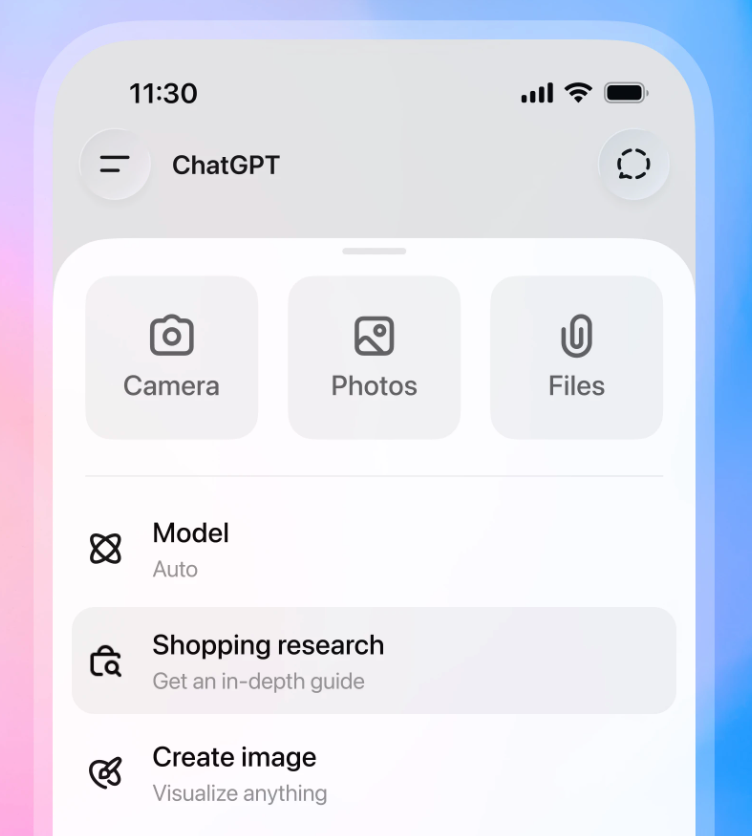
Instead of just listing generic options, ChatGPT opens a visual interface specifically designed for shopping research.
The AI asks clarifying questions:
- What’s your budget?
- Who will use this product?
- Which features matter most to you?
As the user answers, ChatGPT searches the internet in real time, gathering up-to-date information on prices, availability, reviews, specifications, and product images.
With ChatGPT Shopping’s Instant Checkout, you can decide to buy the items right then and there.
How Do Products Show Up on ChatGPT?
Understanding how ChatGPT selects products for its recommendations is crucial if you want your store to be part of this new shopping ecosystem.
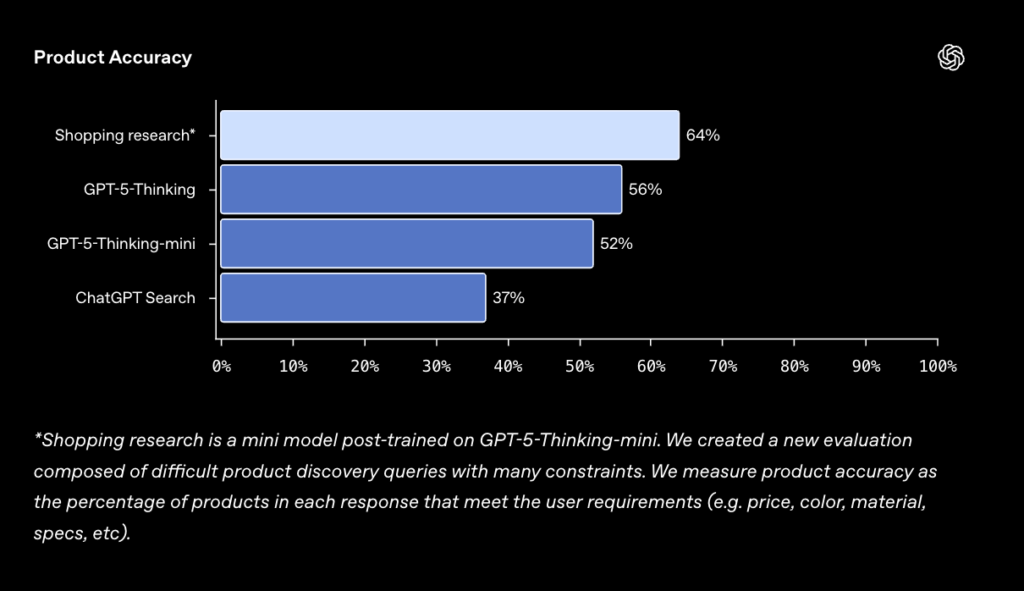
Shopping Research is powered by a specialized version of GPT-5 mini, specifically trained for shopping tasks through reinforcement learning. This means the AI has been taught to:
- Read trusted retail sites
- Cite reliable sources
- And synthesize information from multiple places to create accurate product recommendations
The system searches the internet in real-time when someone starts a shopping research session.
Recommended reading: How to Configure Robots.txt for AI Crawlers (OpenAI, Anthropic & Google)
Factors that Can Affect Your Product’s Visibility
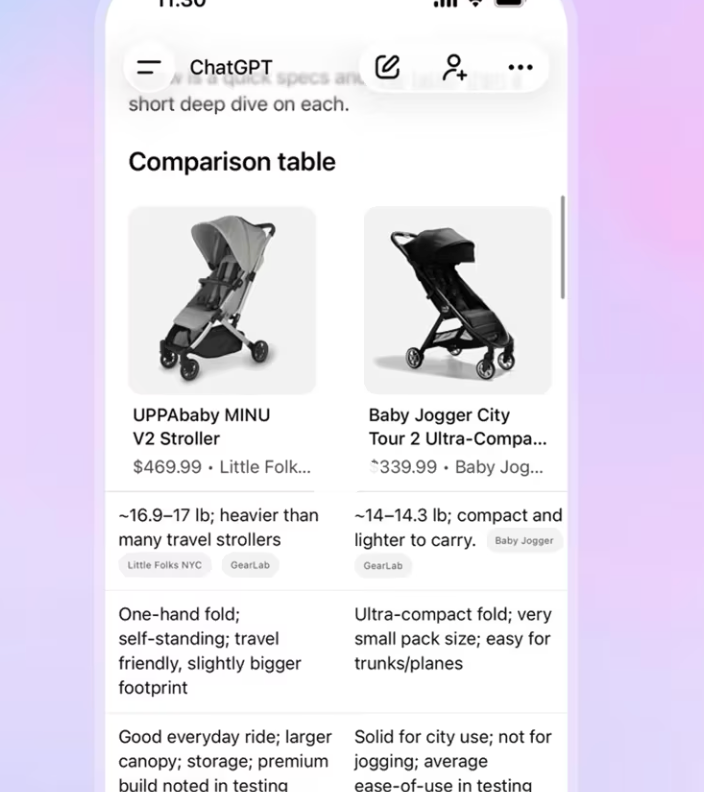
Product details and specifications
ChatGPT needs clear, complete information about what you’re selling. This includes specific features, dimensions, materials, compatibility details, and technical specifications. Vague descriptions don’t cut it. ChatGPT favors products with comprehensive, easy-to-understand details.
Pricing and availability
Current, accurate pricing matters. If your listed price doesn’t match what’s actually available, or if products show as in stock when they’re not, ChatGPT learns to trust your site less. The AI cross-references information from multiple sources, so inconsistencies hurt your chances of being recommended.
Reviews and ratings
User feedback significantly influences which products ChatGPT suggests. The AI doesn’t just look at star ratings; it analyzes what reviewers actually say. Detailed reviews that mention specific use cases, pros, and cons carry more weight than generic five-star ratings.
Retailer reliability
ChatGPT prioritizes products from retailers it considers trustworthy. This means established e-commerce platforms, well-known brands, and sites with consistent, accurate information.
How to Optimize Your Store So ChatGPT Would Recommend Them
Getting your products recommended by ChatGPT isn’t about gaming an algorithm. It’s about making your product information clear, complete, and trustworthy so AI can confidently recommend your items to shoppers.
Write Clear, Detailed Product Descriptions
ChatGPT can only recommend products it understands. Your product descriptions need to go beyond basic marketing copy and actually explain what you’re selling in specific, useful terms.
Start with the fundamentals. Every product should have a complete list of specifications.
- For electronics, that means processor type, memory, storage, screen size, battery life, ports, and connectivity options.
- For clothing, include materials, care instructions, fit details, and sizing information.
- For home goods, specify dimensions, weight capacity, materials, and assembly requirements.
Use natural language that matches how people actually talk about products. If someone were to ask ChatGPT about “running shoes for flat feet,” make sure your product descriptions include that exact phrasing alongside technical terms like “arch support” or “stability features.”
Structure Your Product Data
AI systems excel at parsing structured information. The more organized your product data is, the easier it is for ChatGPT to understand and recommend your items.
Implement schema markup on your product pages. Use Product schema to explicitly tell AI systems what they’re looking at. Include structured data for price, availability, reviews, ratings, brand, and product specifications. This removes ambiguity and helps ChatGPT extract accurate information.
Build Trust Signals
ChatGPT prioritizes recommendations from retailers it considers trustworthy. You need to establish your store as a legitimate, reliable source.
First, collect and display authentic customer reviews. Encourage buyers to leave detailed feedback about their experience with your products. Reviews that discuss specific use cases, mention both pros and cons, and provide context help AI understand whether products actually deliver on their promises.
Next, make your business information visible and consistent. Display your company name, location, contact information, and return policies clearly.
If you have a physical location, include that information. These details help AI systems verify that you’re a legitimate business.
Understand the Limitations
ChatGPT Shopping is powerful, but it’s not perfect. The model can make mistakes about product details, such as exact pricing or current availability. That’s why ChatGPT explicitly encourages users to visit merchant sites for the most accurate information.
How to Check Your Products on ChatGPT Using GenRank
Manually testing shopping queries in ChatGPT gives you snapshots, but it doesn’t tell you the full story. How often does ChatGPT recommend your products compared to competitors? Which specific prompts trigger recommendations? How has your visibility changed over time?
This is where systematic tracking becomes essential.
GenRank helps you monitor how ChatGPT responds to shopping-related prompts in your category. Instead of repeatedly typing queries into ChatGPT and hoping to catch your products being mentioned, GenRank automates the process and gives you consistent data you can actually use.
Here’s how to use GenRank for tracking how your product shows up on ChatGPT:
- Start by creating a free GenRank account.
- Add your brand name and website to GenRank.
- Add the shopping prompts that your customers might ask.
The key is creating the right prompts. Think about the actual questions your target customers would ask ChatGPT when shopping for products like yours.
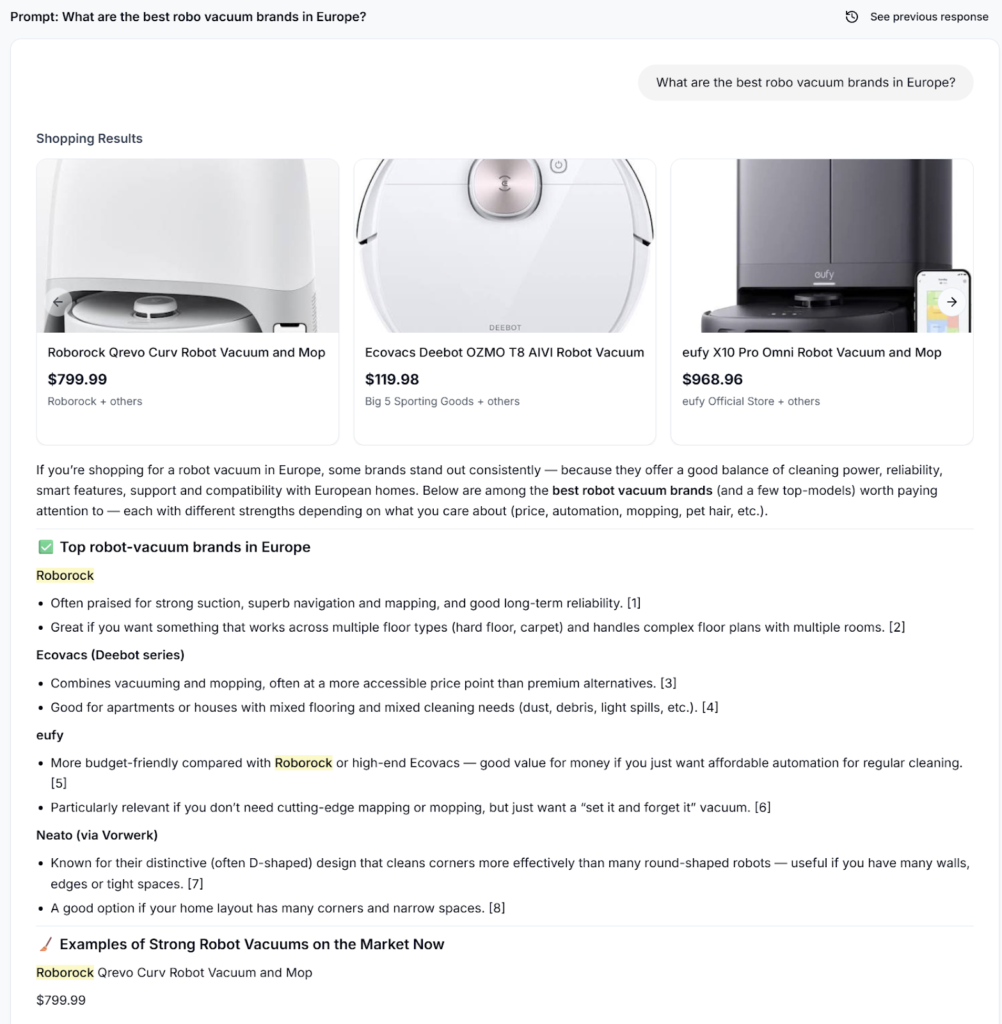
For example, if you sell robot vacuums, you might track prompts like:
- “What are the best robot vacuums for under $200?”
- “Best robot vacuums to give as a gift for the holidays.”
- “What are the best robot vacuum with a mop?”
GenRank analyzes each response and shows you exactly where your products appear (or don’t appear). This gives you an idea of what to optimize. After you’ve optimized your site, run the prompts again on Genrank. Have things changed?
It’s best to do a GEO audit first. We recommend reading: GEO Audit Checklist: From Low to High Priority (2025 Guide)
Start Showing Up in ChatGPT Shopping
The shift to AI-powered shopping is happening right now. Users are already asking ChatGPT for product recommendations, and that behavior will only increase as more people discover products on ChatGPT.
You don’t need to abandon your existing e-commerce SEO strategy. The fundamentals still matter: clear product information, good site structure, and trustworthy presentation benefit both traditional search engines and AI platforms.
What to read next: How to Analyze Brand Mentions in ChatGPT
FAQs
Can I submit my products directly to ChatGPT Shopping?
You can’t upload a CSV of your inventory or use an API to push product data directly to ChatGPT. However, OpenAI has published an allowlisting process for merchants who want to ensure their sites are eligible to appear in Shopping Research results.
Does ChatGPT Shopping work for all product categories?
ChatGPT Shopping Research currently works best for physical products where specifications, reviews, and comparisons matter. Categories like electronics, home goods, sporting equipment, and consumer products tend to perform well. However, the system is still evolving and expanding its coverage.
Will ChatGPT Shopping replace traditional e-commerce SEO?
No, ChatGPT Shopping won’t replace traditional e-commerce SEO—at least not in the near future. Many shoppers still use Google search, browse Amazon, and visit online stores directly. Traditional SEO remains essential for driving traffic and sales.
However, ChatGPT Shopping represents an additional channel for product discovery that’s growing rapidly.