What is Google's New GIST Algorithm (And Why Marketers Should Care)
Here's what GIST actually is, why the SEO implications matter, and what you need to do differently going forward.

For years, the Skyscraper Technique was the golden rule of SEO. Find the top-ranking article, write a longer and better version, and wait for the traffic to come in. It worked — until now.
Google's new GIST algorithm is quietly reshaping what it means to rank. And if you're still building your content strategy around covering what everyone else already covers, this is your wake-up call.
Here's what GIST actually is, why the SEO implications matter, and what you need to do differently going forward.
What is Google's New GIST Algorithm?
GIST stands for Greedy Independent Set Thresholding. Google Research published it at NeurIPS 2025, and the official blog post describes it as an algorithm that selects a high-quality data subset that maximizes both data diversityand data utility.
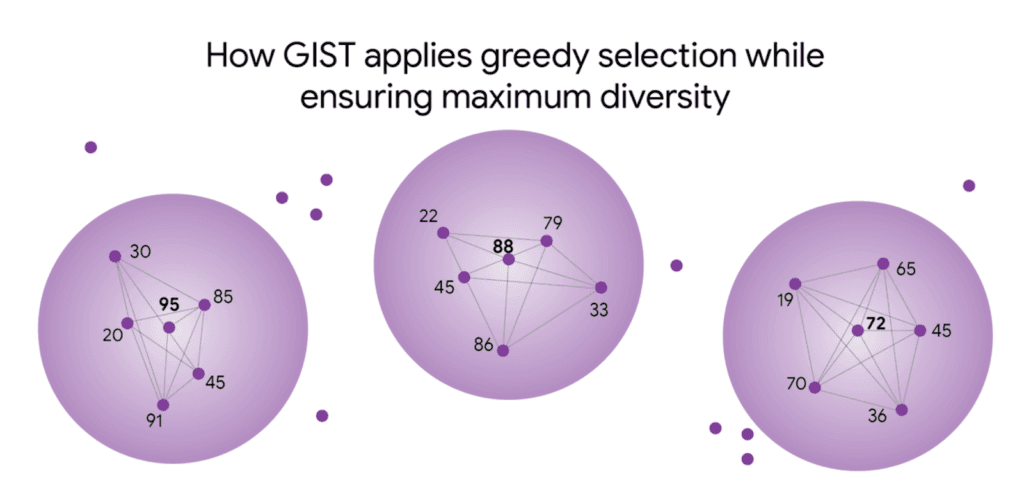
Important Note: One important distinction before we go further: GIST is not a crawling or indexing algorithm running directly on your web pages.
It was developed in the context of machine learning data selection, meaning it helps Google choose which data points to use for training its AI models. The SEO implication is indirect as of now. But we wanted to bring this to marketers’ attention because it could become critical in the future. And we have to start understanding this concept now and see if there are changes we can implement once this algorithm becomes the future.
This update from Google speaks to an overall trend where companies are trying to be more efficient in processing data. Who can blame them? Because of AI, we now have too much data and content!
GIST Explained
So, what does GIST exactly mean?
Google processes a massive amount of web content. A huge portion of that content is redundant, covering the same ideas with slightly different words.
For an AI system, processing all that repetitive data wastes enormous compute resources. GIST was built to fix that by selecting…
the most diverse, high-value data
filtering out near-duplicates
… before they ever reach a Graphics Processing Unit.
Think of it like a dinner party with a strict guest list. You want interesting people in the room. If five guests are all going to say the same thing, you only need one of them. The others get cut. (Sorry, guys!)
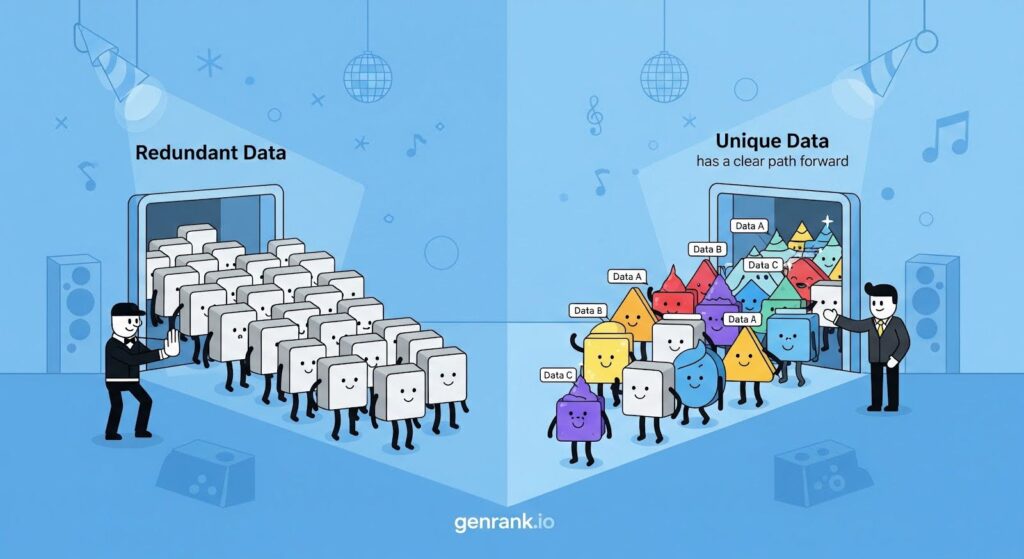
Google's research confirms this: GIST guarantees to find a data subset whose value is at least half the optimal solution, while keeping redundancy to a minimum. It's already being tested with YouTube's Home ranking team to improve the diversity of video recommendations.
The message for content creators? Being correct is no longer enough. You have to be distinct.
Why Marketers Should Care About GIST
You might be thinking, "This is a research paper about machine learning training. Why should I care?"
Let's break down what this means practically.
At the time of this writing, Google GIST is not a mechanism for crawling web pages for SERPs. It was developed in the context of ML training.
However, the way models are trained directly impacts the way your content appears in results, AI overviews and responses, and we strongly believe that we're moving towards a future where search engines (traditional or AI) will adopt GIST or GIST-like algorithms to make their content- and citation selection more cost-effective. Because in the end, in a world of insanely high cash burn, this makes everything a lot more efficient on their side.
Overall, while this is a mathematical concept for processing data, it’s still consistent with the marketing basics: the importance of standing out.
Here’s our advice for writing content if GIST is applied to SEO:
Don't cover what's already covered
If the top-ranking article already explains a concept thoroughly, your version adds zero diversity value to Google's data pool and risks being filtered out entirely. You're not just competing for rankings anymore. You're competing for distinctiveness in a system that mathematically penalizes redundancy.
The old advice was: find a top result, write it better.
The new reality: find a top result, write something different.
But that’s not the only thing, however.
Intent still wins the room
Being different from competing content means nothing if you're not actually answering what the searcher came to find. Diversity for diversity's sake is not the goal.
GIST balances diversity and utility: your content needs to be both unique and genuinely useful. Original content that doesn't address real search intent won't survive either.
In this case, the age-old advice of answering the searcher’s intent is still the rule.
Crawl speed is your new vanity metric
While the GIST algorithm doesn’t specifically discuss Google’s web crawling speed, I believe that the GIST framework has already been happening since AI platforms became part of the user’s search behavior.
How fast Google returns to your site signals how much it trusts your content as a high-utility data source worth prioritizing. If Googlebot is frequently crawling your site, that's a signal of trust.
If it's not, your content may not be registering as a valuable, distinct source worth revisiting.
As an SEO strategist, I personally manage multiple websites. In my monthly analysis, I’ve noticed that Google crawls other sites faster. In SEO, speed is your friend. You want your content to be among the first to be crawled.
Because tech giants are trying to be more efficient, I believe that eventually, some pages won’t even be worthy of crawling. So, you have to make sure your blog posts and pages are crawlable in the first place.
Your brand's citation footprint matters as much as your backlinks
Your presence across Reddit, YouTube, directories, and industry publications is now as strategically important as your backlink profile. LLMs select the most diverse, high-signal sources to synthesize answers from.
Redundant brands get collapsed into one. If your brand shows up in only one place or says only one thing, the model treats you as a single data point, not an authoritative entity.
If you want to understand how your brand is appearing in AI-generated answers right now, tracking your brand mentions in ChatGPT is a good place to start.
How Will GIST Affect SEO and GEO?
GIST doesn't directly change how Google crawls or ranks your pages today. But it does shape the AI systems that evaluate your content's relevance and quality. The implication is indirect and cumulative. And it points toward a direction SEO has been heading for a while: originality over volume, and authority over imitation.
Traditional SEO Implications
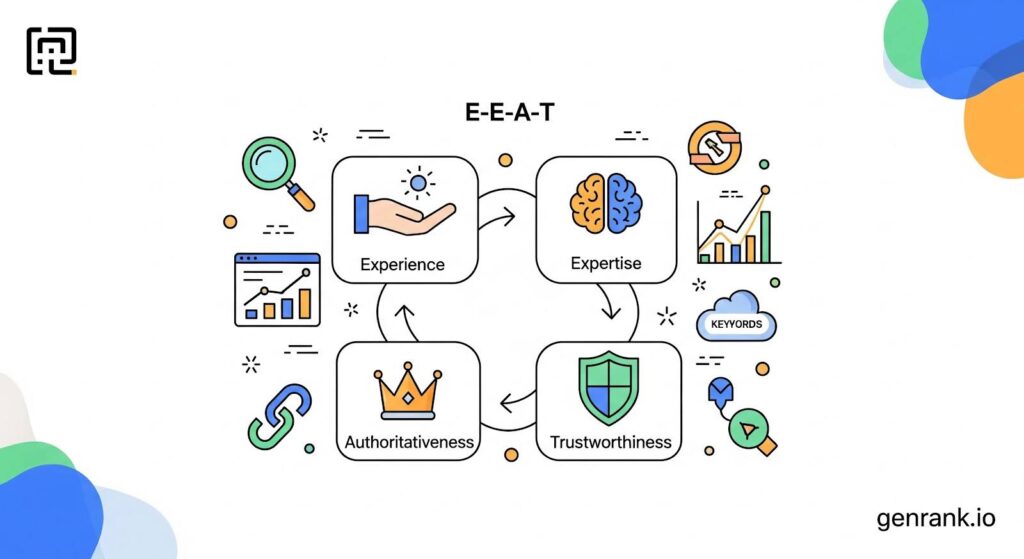
For traditional SEO, this reinforces what good SEOs already know. E-E-A-T (Experience, Expertise, Authoritativeness, Trustworthiness) has never been more relevant. Proprietary data, first-hand experience, and original perspectives are exactly the type of content a diversity-maximizing system would prioritize. Generic content that mirrors the competition is exactly what it would prune.
GEO Implications
For GEO, the implications are even more direct. For example, when Google Gemini synthesizes answers, they draw on the most diverse, high-quality sources available. If your brand appears across multiple trusted platforms with consistent, distinctive information, you become a viable source.
If your brand only shows up in one place, or if your content overlaps too heavily with competitors, you risk being collapsed into the background.
This is why a strong entity and brand signal audit is no longer optional. It's foundational.
Understanding the hybrid search journey your customers are taking, across both Google and AI platforms, helps you see exactly where distinctiveness pays off.
Users ask questions in prompts that no traditional keyword tool would surface. Answering those questions with original, well-structured content is the intersection of good SEO and good GEO.
How to Optimize for the Future of SEO (with GIST in Mind)
The good news: you don't need to overhaul everything. You need to think differently about what makes your content worth keeping.
Step 1: Audit your content for redundancy
Look at your existing content cluster. Are multiple articles essentially saying the same thing? Pick the strongest one, consolidate, and redirect the rest. A leaner, a more distinctive site is a stronger site.
Step 2: Find the gaps your competitors haven't touched
Before writing your next piece, check what the top three results already cover. Then ask: what angle, data point, or perspective is missing? That's your entry point.
For example, in your Google Search Console, you can find long and unique questions that people have actually asked in the Google Search bar.
You can also find unique questions from real users on sites like Reddit about your topic or industry.
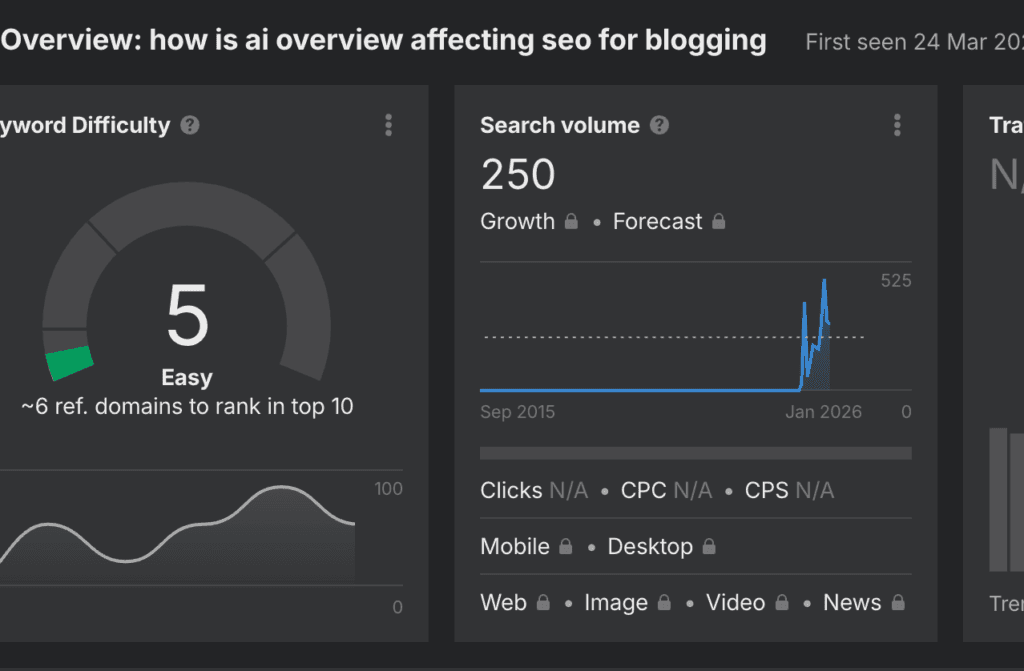
Many companies still prioritize the highest-volume keywords while ignoring low-volume, high-intent keywords.
Step 3: Prioritize original data and first-hand experience
Case studies, surveys, proprietary data, and real-life examples are the types of content a diversity-maximizing system rewards. If you've run your own experiments or have unique insights from your work, lead with those. They're what no competitor can replicate.
For example, in our recent articles on how the search journey has changed, we conducted a small survey of marketers. We included our own findings in the discussion. It was an easy way to add unique data. Most of the data on this topic came from consumers. We didn’t see specific data from marketers’ search behavior.
Step 4: Build your brand citation footprint beyond your site
Publish on LinkedIn, contribute to Reddit threads in your industry, get mentioned in trade publications, and keep your directory listings consistent and accurate.
A GEO audit checklist can help you systematically identify where your brand presence is thin or inconsistent.
Step 5: Track what AI is saying about you
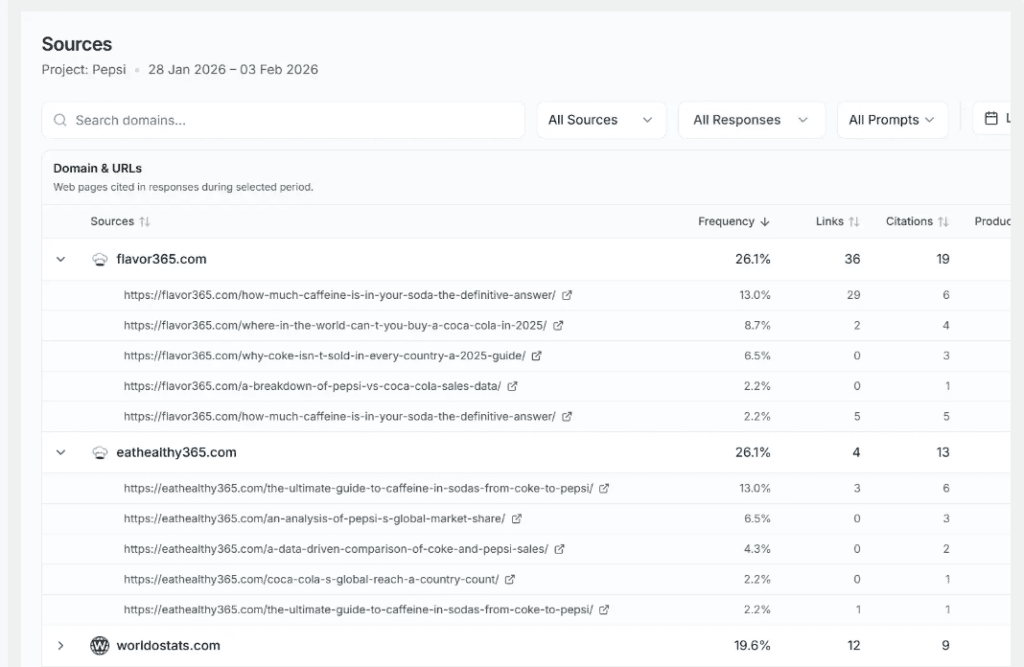
You can't optimize what you can't see. Set up prompts that your potential customers would realistically ask, and track whether your brand appears in the responses. This helps you identify which content is being picked up and which topics you still need to cover. Tools like GenRank make it easy to monitor your brand mentions in ChatGPT consistently over time, so you're not just guessing.
Start Standing Out
GIST is a research paper, but it's also a signal. Google is investing heavily in AI systems that reward diversity and filter out redundancy. That's the direction search is heading, and the brands that adapt now will be better positioned as these systems become more influential.
The companies that will win in this environment aren't the ones publishing the most. They're the ones publishing content that only they could have written.
Ready to see where you stand? Sign up for GenRank and start tracking your brand's visibility in ChatGPT. You can't fix what you can't measure.
FAQs about Google’s GIST
What is Google's GIST algorithm?
GIST stands for Greedy Independent Set Thresholding. It's an algorithm Google Research published at NeurIPS 2025 that selects training data for machine learning models by balancing two goals: diversity (no redundant data) and utility (only valuable, informative data). It was not designed as a page-ranking algorithm, but its logic directly shapes the AI systems Google uses to understand and evaluate content.
How does GIST affect SEO?
The effect is indirect but real. GIST influences the AI models that assess your content's quality and relevance. Content that is original, useful, and distinct from what already exists is exactly what a diversity-maximizing framework rewards. Content that closely mirrors competitors risks being treated as redundant, which is something the models trained on this framework are specifically built to deprioritize.
Should I change the way I do SEO now because of GIST?
You don't need to panic, but you do need to evolve. The core shift is this: stop optimizing for coverage of what everyone else already covers, and start optimizing for distinctiveness. That means original research, unique angles, first-hand experience, and a tighter, more focused content cluster. The fundamentals of E-E-A-T, technical SEO, and search intent still apply.
What should marketers and business owners think about future Google changes?
The direction is clear, even if the specific updates aren't always announced. Google is building AI systems that reward originality and penalize redundancy. Whether it's GIST, core updates, or AI Overviews, the pattern is consistent. The best long-term strategy is to produce content that only you can produce: proprietary data, real expertise, and genuine perspectives.
Is there a tool that helps me understand how my brand is mentioned in ChatGPT?
Yes. GenRank lets you set up the prompts your customers are likely asking and automatically tracks whether your brand appears in ChatGPT's responses. You can monitor mention frequency, positioning, and how your competitors are performing on the same prompts. It's free for up to 10 prompts, so you can start tracking without any upfront investment.