
The way we think about SEO has fundamentally shifted, and it’s only going to keep changing.
For years, SEO had a straightforward formula: find high-volume keywords, create optimized content, build backlinks, and watch your rankings climb.
But AI tools like ChatGPT, Perplexity, and Claude have introduced a new reality. One where people don’t always type queries into Google anymore.
This shift raises critical questions for marketers and business owners: How do you strategize content when search behavior is splitting between traditional search engines and AI platforms? What does the future of SEO actually look like?
In this article, we’ll explore:
- How SEO specialists approached content before AI
- The current state of SEO with AI in the mix
- What the future holds for search optimization
- Practical strategies to prepare for what’s coming
If you’d like to read first how the current search behavior is changing, please read our article on the hybrid search journey.
How Was SEO Before AI?
We can’t discuss the future of SEO without discussing the past.
Two years ago, when choosing which blog posts to write, SEO specialists followed one general rule: choose high-volume, low-competition keywords.
The process was simple. You’d open your keyword research tool, sort by search volume, filter for keywords with manageable competition, and create content around those terms. If a keyword had 10,000 monthly searches and low difficulty, that was your green light.
The strategy was predictable and data-driven. High volume meant more potential traffic. Low competition meant a realistic chance of ranking. Together, they indicated opportunity.
SEO specialists would build entire content calendars based on this approach. You’d identify 20-30 high-volume, low-competition keywords in your niche, map them to blog topics, create optimized content, and track your rankings. Success meant appearing in the top 10 results on Google.
This approach worked consistently for years. Then LLMs changed everything.
How Is AI Changing SEO Right Now?
Nowadays, it’s not about the keyword volume anymore. While it’s a good indicator of how many people are searching for that particular keyword, it’s not the whole story anymore.
There could be value even in zero-volume keywords.
Zero Volume
Open Ahrefs or SEMrush right now. You’ll notice something strange: keywords with zero volume. A lot of them are really long queries.
That’s mostly because people have been using Google Search to access Gemini. They’re typing full questions and prompts directly into the search bar, treating Google like an AI assistant instead of a search engine.
These queries look like:
- “How do I track my brand’s performance in ChatGPT responses over time?”
- “What’s a good tracker for ChatGPT sources?”
- “How can I track if ChatGPT and Claude are mentioning my competitors more than my brand?”
Here’s more from Ahrefs
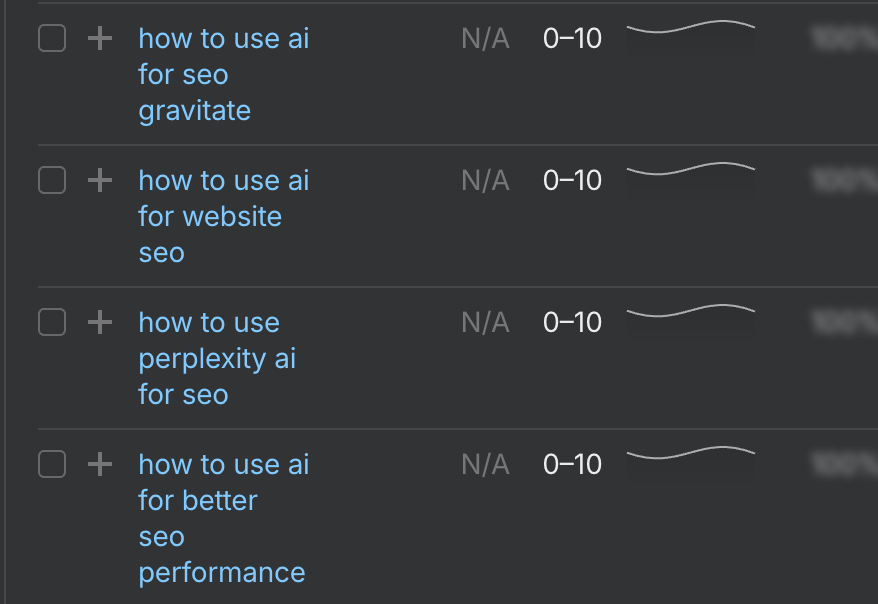
These are real questions people are asking. They’re valuable. They show clear intent. But they have zero search volume in your keyword tools because this data is so new.
Pro tip: Publish an article about a zero-volume keyword. After Google has crawled it, you’ll see the impressions in Google Search Console. The impressions show that people are actively searching for the topic, even though Ahrefs reports zero volume.
This breaks the old SEO rule. You can’t filter for “high-volume, low-competition” when the most valuable queries have zero volume.
Traditional keyword research tools can’t capture these because they’re built on historical search data. But understanding how AI search works requires a different approach entirely.
Zero Clicks
The problem that started it all: zero clicks. This was the first indicator that LLMs are starting to really affect businesses and how they viewed SEO.
When someone searches on Google, they often see an AI-generated answer at the top of the page. The answer synthesizes information from multiple sources and presents it directly in the search results.
Your content becomes raw material for AI responses, but you don’t get the traffic you’d typically receive from search engines.
Google has been moving toward zero-click searches for years with featured snippets and knowledge panels. But AI Overviews have accelerated this trend dramatically. Instead of scanning through links, users get complete answers right there in the results, often without clicking through to any website.
The Future of SEO
Based on current trends and the evolution of AI, here’s what’s likely coming for search optimization.
Context Is King
When everyone can easily write any content using AI, content isn’t king anymore. Context is.
One thing that will most likely remain the same is understanding the context behind the keywords and the queries, also known as the search intent. Content creators and companies that can pinpoint users’ intent and address it effectively in their articles have a better chance of success.
AI tools don’t just evaluate what you wrote. They assess who you are, what expertise you bring, where you’ve been mentioned, and how other authoritative sources reference you.
Think of it this way: if you publish an article about financial planning, AI tools are asking:
- Is this person a certified financial planner?
- Have reputable financial publications cited them?
- Do other finance websites mention them as experts?
Your content quality still matters tremendously. But without the surrounding context of authority and expertise, AI tools will prioritize other sources.
Search Intent Will Continue to Diversify
For years, we’ve categorized search intent into four clear types:
- Informational Intent: Users are looking for answers, information, or solutions to a problem. They often use modifiers like “how,” “what,” “guide,” or “tips.”
- Navigational Intent: Users want to reach a specific website, brand, or page. They likely know the destination but use search engines to find it.
- Commercial Investigation Intent: Users are in the research phase, plan to buy soon, but need to compare options, read reviews, or find the best product. They often use terms like “best,” “top,” “vs,” or “review.”
- Transactional Intent: Users are ready to make a purchase, download, or complete a specific action. These queries often include keywords like “buy,” “price,” “cheap,” or “near me.”
This is going to diversify even further because with AI conversations, there are so many nuances of what you can ask. We’re already seeing new types of intent emerging:
- Strategy and Data Analysis: Users asking AI to help them interpret data, identify patterns, or develop strategic approaches.
- Learning: Users engaging in deeper educational conversations that go beyond simple how-to queries.
- Execution: Users asking AI to help them complete tasks or create specific deliverables.
- Seeking Advice: Users seeking personalized recommendations tailored to their specific situation.
- Emotional Support: Users turning to AI for reassurance, validation, or encouragement in professional contexts.
Your content strategy needs to evolve to address these diverse intent types. Creating blog posts that target individual keywords isn’t enough anymore. You need comprehensive resources that serve as source material for AI tools answering multifaceted, context-dependent questions.
Original and Unique Content Wins
Here’s what’s happening behind the scenes: Google and other big LLM companies are putting more effort into improving efficiency. That means they want to process less data. The less data is processed, the less it’s going to cost them.
They are trying to provide the best response by processing less data.
What does this mean for you? AI companies are becoming increasingly selective about which content they crawl, index, and reference. They can’t process the entire internet for every query. It’s too expensive.
So they prioritize. And what they prioritize is original, unique content that can’t be found anywhere else. For example, in our article here at Genrank, we conducted a small survey of marketers to see how AI has affected their search behavior.
AI tools can synthesize information from multiple sources, but they can’t create original research. They can only reference it. When you publish original data, case studies, or proprietary insights, you become an indispensable source.
Judge the Success of SEO with Different Metrics
The metrics that defined SEO success for the past two decades are becoming incomplete indicators of your actual performance.
Rankings, organic traffic, and click-through rates still matter. But they only tell half the story now.
When your content is cited by ChatGPT in responses to users, but none of them click through to your site, traditional analytics show nothing. You have zero visibility into that impact. Yet you’ve influenced thousands of potential customers.
Here are a few things to check to know whether you’re succeeding in SEO:
- Traffic diversity: Look at where your traffic is coming from. Are you getting visitors from traditional Google search, AI Overviews, ChatGPT referrals, and other AI platforms?
- Brand search: Are people searching for your brand by name? This is one of the strongest indicators of success in the AI era.
If you’re using a GEO tool like Genrank, you can monitor:
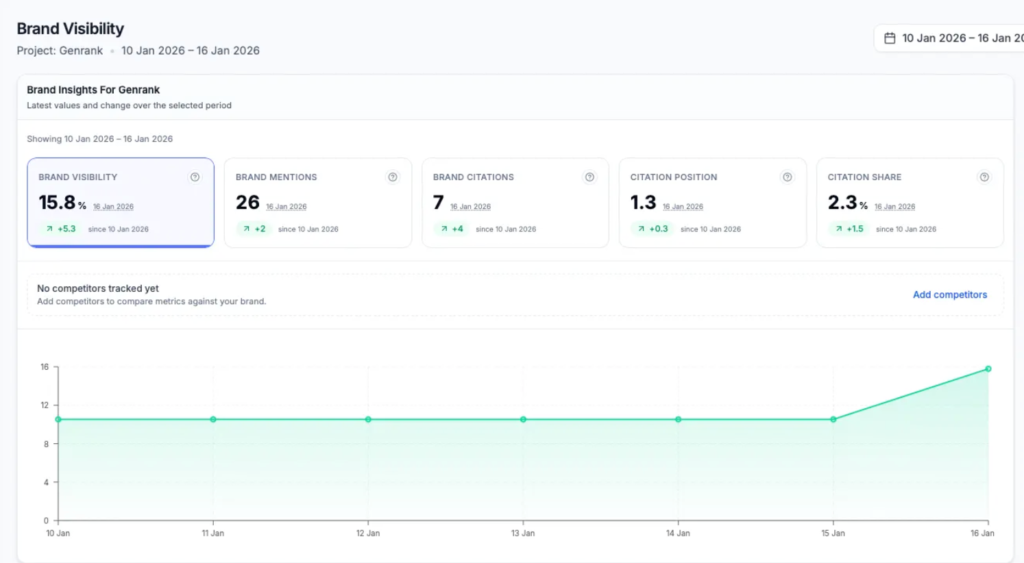
- Brand mentions: Track how often your brand appears in ChatGPT responses across tracked prompts.
- Citation position: See if you’re mentioned first, middle, or last in AI-generated lists.
- Competitor comparison: Monitor how your brand visibility compares to competitors on the same prompts.
- Sentiment analysis: Understand whether AI tools present your brand positively, neutrally, or negatively.
- Prompt performance: Identify which questions trigger your brand mentions and which don’t.
You can give Genrank a try and see how your brand is performing.
What Should Marketers Do About the Future of SEO?
The shift to AI-powered search requires rethinking content strategy, but it doesn’t mean abandoning traditional SEO. The most effective approach combines both.
Here’s how to prepare:
- Understand your current AI visibility. You can’t improve what you don’t measure. Use tools designed for tracking GEO to see how AI platforms are currently referencing your brand (or not referencing it at all).
- Audit existing content with an AI lens. Review your content library and ask: Is this structured for easy extraction by AI? Does it answer specific questions completely? Is it backed by clear expertise and authority signals?
- Create content that serves both humans and AI. Write comprehensive answers to questions your audience actually asks. Include original data, research, and insights. Structure content with clear headings and standalone sections that AI tools can easily parse and reference.
- Build authority beyond your website. Get cited in industry publications. Contribute expert commentary. Participate in relevant discussions on Reddit and forums. AI tools look at your broader digital presence, not just your website content.
- Track performance differently. Traditional metrics like rankings and click-through rates remain important, but add new metrics: brand mentions in AI responses, citation frequency, and how AI tools characterize your expertise.
The future of SEO isn’t about choosing between traditional search optimization and AI visibility. It’s about mastering both, because the people you’re trying to reach are using both.
The Future of SEO
The old playbook of chasing high-volume keywords and optimizing for page one rankings still works, but it’s no longer enough. People are splitting their queries between Google and ChatGPT, between traditional search and AI conversations.
The good news? You don’t have to choose between SEO and GEO. The best approach combines both. Track your rankings and your brand mentions. Measure organic traffic and AI citations.
The companies that thrive in 2026 and beyond will be the ones that master both. Because your customers aren’t choosing between Google and ChatGPT. They’re using both. And you should be visible in both.
Ready to understand your AI visibility? Sign up for GenRank and start tracking how your brand appears in ChatGPT responses. You can’t optimize what you don’t measure.
Frequently Asked Questions
What tools should I use to help me see how my brand is mentioned in ChatGPT?
Several tools now track brand mentions in AI responses. GenRank specializes in ChatGPT visibility and offers a free tier for up to 10 prompts. Writesonic provides comprehensive tracking across ChatGPT, Perplexity, Claude, and Gemini.
How is AI-powered search different from traditional search engines?
Traditional search engines provide a list of ranked links. AI-powered search synthesizes information from multiple sources to deliver direct answers in a conversational format. With Google, you click through to websites. With ChatGPT or Perplexity, you receive immediate answers, often without visiting any source website.
What does “zero-click search” mean for my website traffic?
Zero-click search means users get answers without clicking through to any website. AI tools have accelerated this trend significantly. Instead of offering 10 links where you might capture clicks, AI provides complete answers synthesized from multiple sources. This can substantially reduce traditional website traffic, particularly for informational queries.
Should I still focus on high-volume keywords in 2026?
High-volume keywords remain important, but they no longer tell the complete story. AI-powered search has introduced “zero-volume” searches—unique, conversational queries that don’t appear in traditional keyword research tools. Someone asking ChatGPT a highly specific question creates real value without adding to measurable search volume. The solution is balancing both approaches: maintain optimization for established high-volume keywords while creating comprehensive, expert content that answers specific questions.